You built the thing. The features work. The UI doesn’t look terrible. You’re ready to launch your micro-SaaS.
Except you’re probably not.
92% of SaaS startups fail within three years, according to Webapper’s 2025 analysis. And a study of 1,000 micro-SaaS businesses by RockingWeb found that 70% generate under $1,000 per month. The gap between “I shipped something” and “I shipped something that makes money” is enormous.
The good news? Most failures are preventable. 42% of startups die because there’s no market need. Another 29% run out of cash. These aren’t mysterious forces — they’re checklist items that founders skip in the rush to launch.
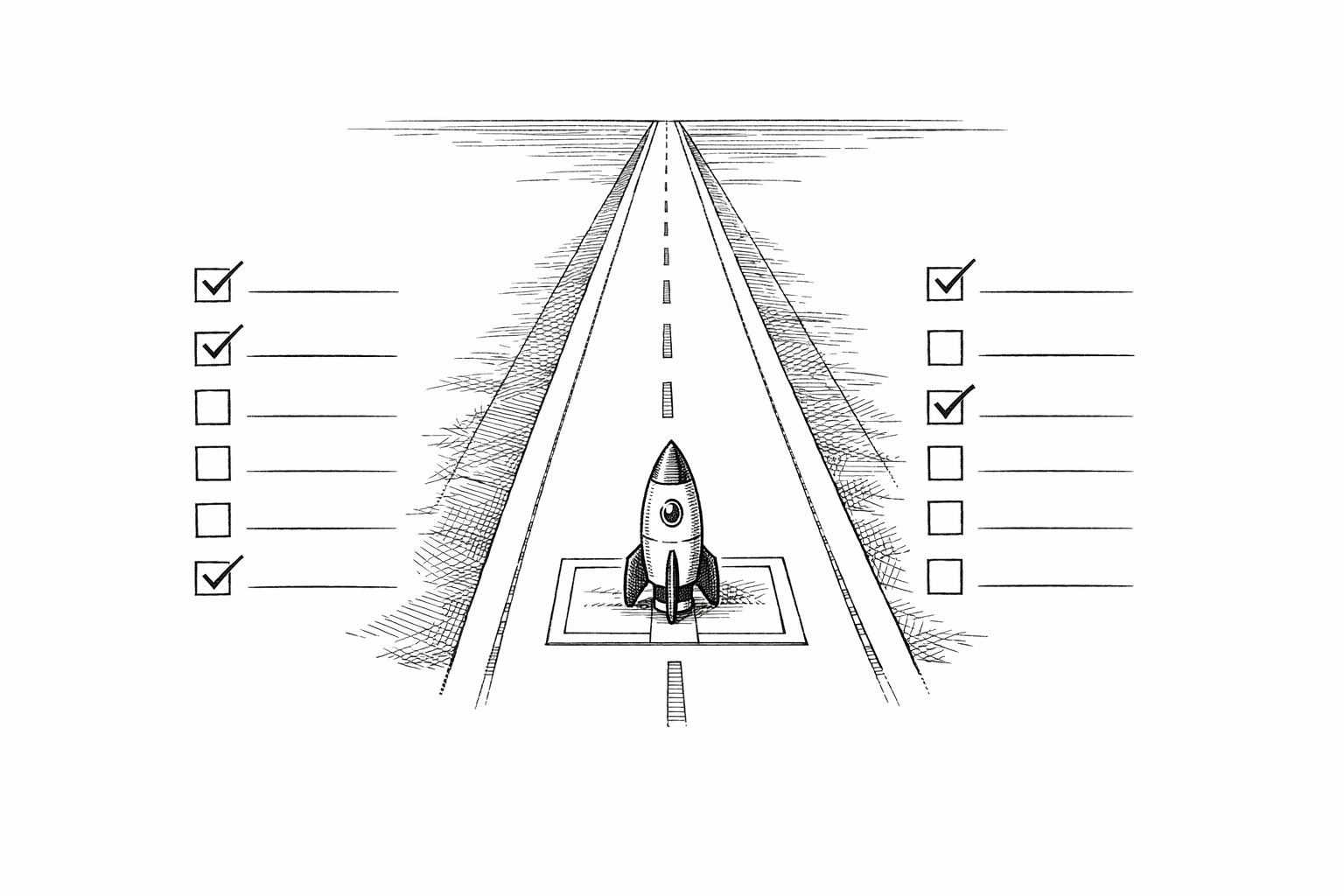
This micro-SaaS launch checklist covers the 7 phases you need to complete before launch day. Every item is backed by a specific stat about what happens when you skip it. Print it out, check things off, and avoid joining the 92%.
This isn't a beginner's guide
We're assuming you already have a working product or near-working MVP. This checklist covers the pre-launch steps that separate products that make money from products that collect dust. If you're still at the idea stage, start with getting beta users first.
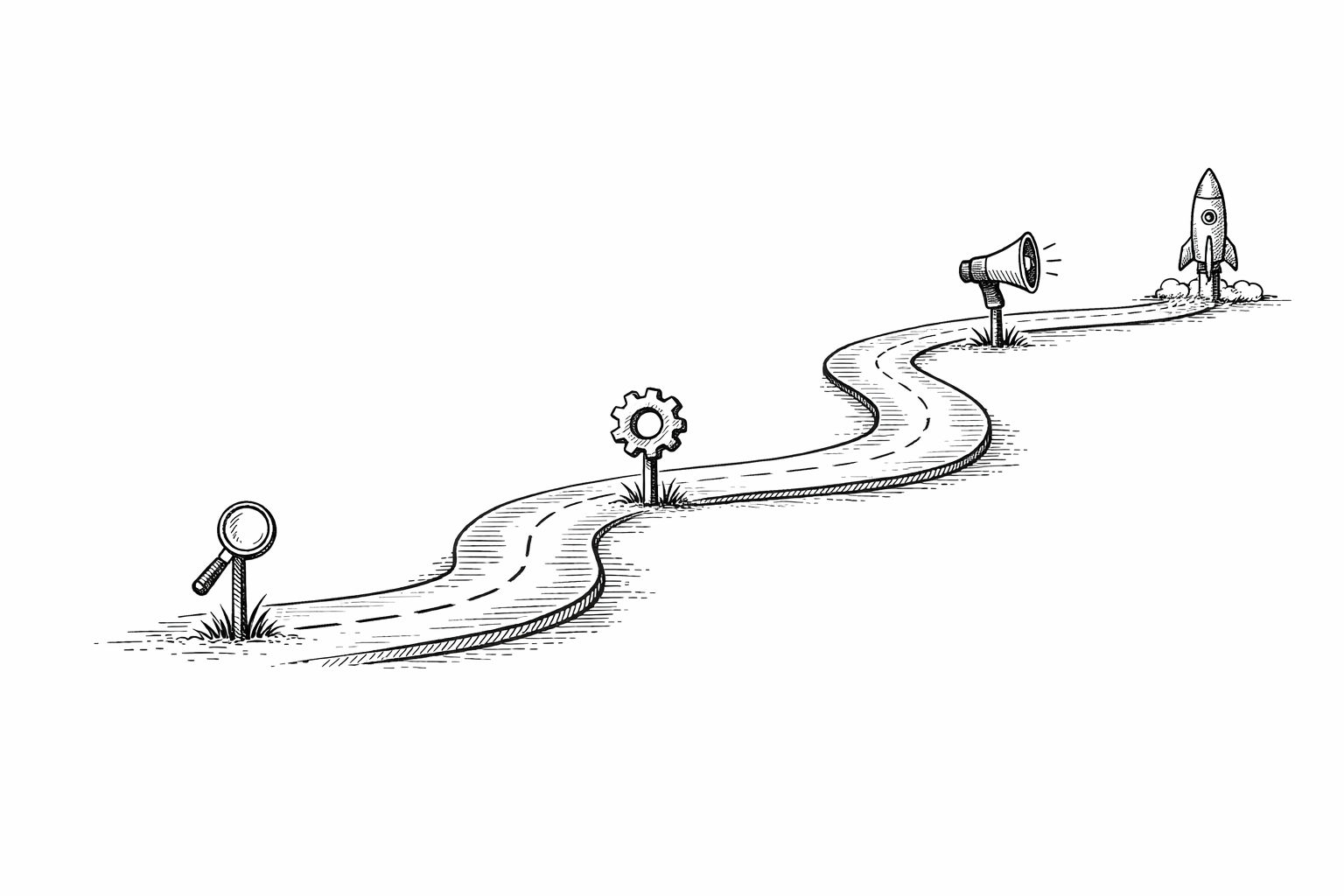
The micro-SaaS launch journey: validation, scope, tech, onboarding, analytics, marketing, launch.
Phase 1: Validate That Someone Will Actually Pay
This is where 42% of startups die. They build something nobody asked for.
Before you touch your launch plan, you need hard evidence that real humans will exchange money for your product. Not “my friend said it’s cool.” Not “the Reddit post got upvotes.” Actual purchase intent.
Here’s your validation minimum:
- 15–30 problem interviews with people in your target niche. Talk about their pain, not your product.
- A landing page with a signup or pre-order button. Target 20+ email signups or 10–20 pre-commitments (credit card or signed intent). If you can’t get 20 signups in 30 days from word-of-mouth, narrow your audience before building more.
- Competitor analysis. Finding competitors is a good sign — it proves there’s a market. Zero competitors usually means zero demand.
SaaSRanger puts it bluntly: the average founder who skips validation spends 8+ months building before discovering nobody wants the product.
The $1 test
One real dollar from a stranger beats 100 survey responses. If someone will pay $1 for early access before the product is done, you have real signal. Everything else is polite encouragement.
Phase 2: Lock Your Scope (Then Cut It in Half)
Feature creep is the #1 cause of launch delays, according to BuildVoyage’s SaaS pre-launch analysis. And MicroSaaSHQ’s research on first-time founder mistakes found that continuously adding features without customer feedback creates bloated products filled with features customers don’t value.
Your v1 needs exactly four things:
- User authentication (email + password, OAuth at minimum)
- The core workflow that delivers your primary value — one workflow, not three
- Billing integration (Stripe, Lemon Squeezy, Paddle) tested end-to-end
- Basic settings (account page, maybe workspace config)
That’s it. DesignRevision’s launch data shows that products launching with fewer, polished features retain ~40% more users than feature-bloated launches.
Forget planning for 100K concurrent users. As MicroSaaSHQ notes, planning complex architecture to scale massively is “futile when you haven’t even acquired a handful of customers.” Ship one clear value proposition. Defer everything else to post-launch.
Phase 3: Get Your Technical House in Order
This is the boring stuff that will ruin your launch week if you skip it.
- Error handling: Human-readable error messages, not stack traces. Every error tells the user what happened and what to do next.
- Load testing: Can your app handle your launch-day target? Even 100–500 concurrent sessions. Test it.
- Backups and rollback: Automated database backups (daily minimum). A tested deploy rollback strategy.
- Security basics: HTTPS everywhere. API keys in environment variables. Input sanitization. Secure password hashing (bcrypt or argon2).
- Billing tested end-to-end: Subscriptions, upgrades, downgrades, cancellations, failed payment handling. Don’t discover billing bugs with real customers.
One often-overlooked stat: 35–48% of SaaS churn is involuntary — caused by failed payments and billing issues, not unhappy customers (Webapper, 2025). Your billing flow needs to be airtight.
Don't skip compliance
DesignRevision's launch data shows that skipping GDPR and basic legal requirements causes 30% early churn from trust issues. You need a Privacy Policy, Terms of Service, and a clear description of how you handle data. If you have EU users, add a data deletion option. Use a reputable template to start — refine later.
Phase 4: Design Onboarding That Doesn’t Lose 75% of Users
Here’s a stat that should keep you up at night: 75% of SaaS users abandon products within the first week when they don’t experience value quickly enough (CloudCoach/Capicua). And friction in the first 90 seconds after login leads to 3.2× higher churn.
Your onboarding has one job: get users to their “aha moment” fast.
- Define one aha metric. What single action proves your product works? First report generated. First automation triggered. First integration connected. Pick one.
- Cut signup fields to 3 or fewer. Flowjam’s data shows every extra field costs ~7% conversion. Ask for email, password, and maybe one more thing. Push everything else to later.
- Pre-load demo data. Empty states kill products. If a user signs up and sees a blank dashboard, they leave.
- Replace text walls with 10-second silent videos under 400KB for key steps (Flowjam’s recommendation). Nobody reads your onboarding docs.
Poor onboarding drops retention by 50%, according to DesignRevision. On the flip side, customers who complete structured onboarding show 21% higher product adoption and 25% higher first-year retention (Capicua).
Phase 5: Install Analytics Before Launch, Not After
DesignRevision’s SaaS launch checklist puts it plainly: “You cannot optimize what you cannot measure. Install analytics before launch, not after.”
Here’s the minimum analytics stack you need on day one:
- Product analytics (PostHog, Mixpanel, or Amplitude): track signups, activation events, funnel drop-offs
- Error monitoring (Sentry or Flare): real-time alerts for backend and frontend errors
- Revenue tracking: MRR, churn, trial-to-paid conversion
The specific events you need to track from hour one:
Minimum analytics events to track from launch day, with industry benchmarks
| Event | Why It Matters | Benchmark to Watch |
|---|
| signup_completed | Top of your funnel | Landing page → signup: aim for 3.8%+ (Unbounce SaaS median) |
| first_core_action | Your 'aha moment' — did they get value? | Target within 24–72 hours of signup |
| onboarding_completed | Did they finish the guided setup? | Structured onboarding = 21% higher adoption |
| subscription_started | Are they paying? | Opt-in trial → paid: 8–15% is normal (OpenView/ChartMogul) |
| subscription_canceled | Where are you losing people? | SaaS monthly churn: 5–7% average, 3% optimal |
The median SaaS product sees 847 users in month one with 8.2 months to break even (DesignRevision). Plan your cash flow accordingly — and make sure you have the data to actually see what’s happening.
Phase 6: Build Your Launch Audience (Start 2–6 Weeks Early)
First-time founders with technical backgrounds consistently underestimate marketing. MicroSaaSHQ’s research found that many “mistakenly believe that if the product is good enough, they will get the customers automatically.”
They won’t. Here’s your saas pre-launch marketing minimum:
Landing page ready:
- Clear headline and sub-headline
- Social proof (even beta user quotes work)
- Pricing and FAQ
- Email capture for your waitlist
Content ready:
- 1–3 “how it works” blog posts or guides
- 1–2 comparison pages (“vs spreadsheets,” “vs doing it manually”)
Email sequence ready:
- T-7 days: “We’re launching next week”
- T-1 day: “Tomorrow’s the day”
- Launch day: “We’re live”
- T+7 days: follow-up with early user wins
Pick 1–2 primary launch channels:
- Product Hunt, Hacker News Show HN, relevant subreddits
- Niche Slack/Discord communities
- X/Twitter or LinkedIn (pick one, do it well)
A well-executed Product Hunt launch typically drives 500–1,500 visitors in the first week, with 3–10% converting to free signups (MySignature.io 2024 survey / Edward Sturm case studies). That’s 15–150 signups from a single channel. Not bad for free.
For a deeper dive on choosing the right launch channels, we’ve broken down the data on what actually works for solo founders.
Phase 7: Launch Day Execution
Launch day isn’t “post it and pray.” It’s a structured, hour-by-hour operation.
Set realistic targets. For an indie micro-SaaS, 100–500 signups on launch day is a strong stretch goal. Lower numbers are common and not a failure. What matters is the quality of those signups and whether they activate.
Launch day runbook:
- Send your launch email to the waitlist
- Post on your chosen communities (and actually respond to comments — fast)
- Activate any early-adopter promotions (lifetime deal, beta discount)
- Monitor your infrastructure: errors, performance, billing
- Watch your analytics in real time: signups, activation, first sessions
- Document every bug and repeated UX complaint for post-launch prioritization
Products that skip beta testing fail validation 60% of the time (DesignRevision). If you haven’t tested with 20–50 beta users in a 2–4 week window before this day, you’re launching blind.
The Complete Micro-SaaS Launch Checklist
Step 1
Validation
15–30 problem interviews completed. Landing page live with 20+ signups or 10–20 pre-commitments. Competitor analysis done. One-sentence value hypothesis written.
Step 2
Product Scope
V1 feature set locked — auth, core workflow, billing, basic settings. No feature creep. One clear value proposition, not three.
Step 3
Technical Readiness
Error handling is human-readable. Load tested for launch-day traffic. Database backups automated. Billing tested end-to-end (subscribe, upgrade, downgrade, cancel, failed payment). HTTPS, security headers, input sanitization.
Step 4
Onboarding
One 'aha moment' defined and reachable in under 2 minutes. Signup form has ≤3 fields. Demo data pre-loaded. Empty states eliminated. Guided tour or micro-videos for key steps.
Step 5
Analytics & Monitoring
Product analytics installed (PostHog/Mixpanel). Error monitoring live (Sentry). Events tracked: signup, first core action, onboarding complete, subscription started/canceled. Revenue dashboard configured.
Step 6
Marketing & Audience
Landing page with social proof and pricing. 1–3 blog posts published. Email waitlist built. 4-email launch sequence ready. 1–2 launch channels chosen and prepped.
Step 7
Launch Day
Beta tested with 20–50 users. Launch emails sent. Community posts live. Early-adopter promotion active. Infrastructure monitored. Bugs and UX complaints documented.
After Launch: The First 30 Days Matter More Than Launch Day
Launch day gets the attention, but the first 30 days determine whether your micro-SaaS survives.
Focus on three things:
- Activation bottlenecks. Where do users drop out of onboarding? Fix those first — before adding any new features.
- Talk to users. 1:1 calls with power users and churned users. In-app feedback widgets. Short NPS surveys at day 1, 3, and 7.
- Ship small improvements weekly. Changelog updates. In-app “what’s new” notifications. Keep the momentum visible.
ChartMogul’s benchmark data shows that nearly half of software startups reach $1M ARR within 10 years — but only 1 in 10 reaches $10M. The early compound growth from your first 30 days of iteration sets the trajectory.
The micro-SaaS businesses that break through the $1K/month barrier (the top 30%, per RockingWeb’s study) are the ones that treat launch as the start of learning, not the finish line.
Key metrics for your first 30 days
Activation rate: % of signups who hit your aha moment (target: improve weekly)
Day-1 retention: Do users come back the next day?
Trial → paid conversion: 8–15% is normal for opt-in trials, 25–50% for credit-card-required trials
MRR milestones: First $100, then $1K, then $3K — the common micro-SaaS breakpoints
One More Thing: Don’t Forget Content
You just spent weeks or months building a product. Now you need people to find it.
SEO is the highest-ROI marketing channel for micro-SaaS because it compounds. A blog post you publish this month can drive signups for years. But most solo founders don’t have time to research keywords, write 2,000-word posts, and publish consistently.
That’s exactly why we built a content system that runs on autopilot — so founders can focus on product while their blog builds traffic in the background. If you want to see how real keyword data drives every post we write, that’s worth a look too.
Want your micro-SaaS to rank on Google?
You've got the launch checklist. Now you need a content engine. Vibeblogger handles keyword research, writing, images, and publishing — so you can focus on building product, not writing blog posts.
See how Vibeblogger works