From 0 to 1000 Twitter Followers as a Founder: What Actually Works in 2026
The first 1,000 followers on X is the threshold where the algorithm starts compounding your reach. Here's the data-backed, three-phase playbook — built from 20 real founder accounts and the open-sourced recommendation algorithm.
Rori Hinds··10 min read
Most founders treat growing on X like it’s a content problem. Write better tweets. Post more often. Find the right hook.
That’s why most founders fail at it.
The data tells a different story. When Innmind ran growth across 20 founder and company accounts — taking each from roughly 0 to 20,000 followers — the winning variable wasn’t writing talent. It wasn’t niche selection. It wasn’t even post frequency.
It was whether the founder treated X like an engagement system, not a publishing platform.
Below 1,000 followers, your posts reach almost nobody. The X algorithm — rebuilt in January 2026 around the same transformer architecture as Grok — doesn’t surface content from accounts with no engagement history. You’re posting into a room nobody walks into.
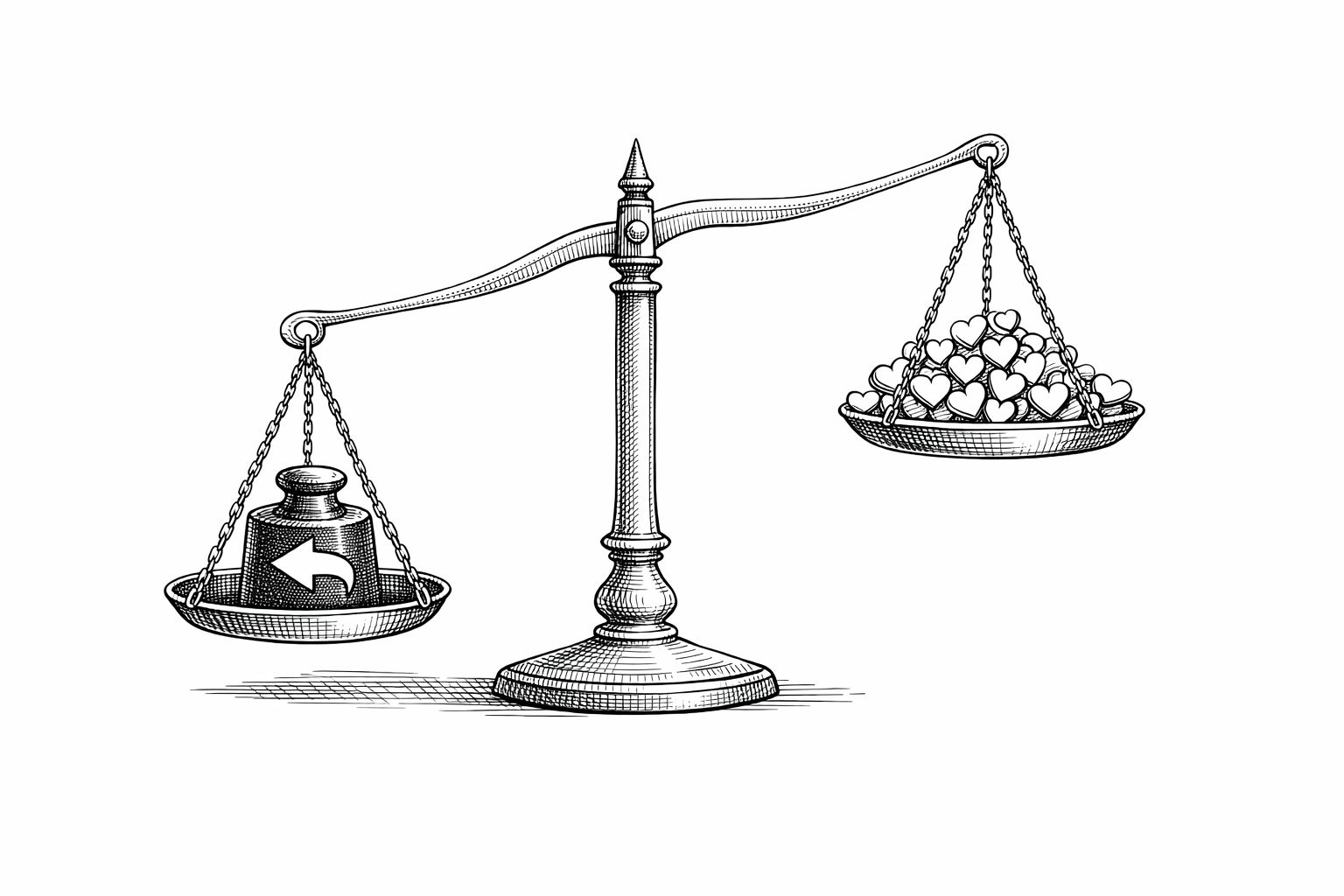
But here’s what the open-sourced code actually rewards: replies. Specifically, replies that start conversations. A reply that gets a response from the original author carries a +75 engagement weight — that’s 150x more than a like. A standard reply is still worth +13.5 weight, or 27x a like.
If you’re a solo founder trying to grow twitter followers as founder, the playbook isn’t “write viral threads.” It’s “become the most useful reply in your niche.”
Here’s exactly how to do it — with real numbers, real timelines, and the algorithm mechanics that explain why each step works.
Why 1,000 Followers Actually Matters
The first 1,000 followers is a real algorithmic threshold. Below 1K, your posts reach mostly your direct followers and a thin second-degree slice. Above 1K, posts start surfacing to second-degree and third-degree connections with much higher consistency. The compounding starts. Every post before 1K is a cold gamble. Every post after 1K has distribution baked in.
The 5-Minute Profile Fix That Converts Visitors
Before you post a single tweet, fix your profile. When someone sees your reply and clicks through, your profile has about 3 seconds to earn a follow.
Here’s what the data says actually matters:
Real headshot, not a logo. People follow people. Founder accounts with clear face photos consistently outperform brand avatars.
Bio formula: What you build + who you help + one proof point. Under 160 characters. No emoji walls. Example: “Building @YourSaaS | Helping indie hackers ship faster | $0 → $3k MRR in 6 weeks.”
Pinned tweet: Your single best-performing post or a clear “this is who I am and what I tweet about” statement. New visitors read this first.
Header image: Something. Anything. A blank header signals inactive account. A 10-minute Canva graphic with your company name does the job.
Monolit’s 2026 founder guide found that most founders who stick with a consistent strategy for 90 days see 500–2,000 followers without spending a dollar on ads. But the ones who skip profile optimization leave 20-30% of potential follows on the table — visitors who click through but don’t convert because the profile doesn’t clearly communicate who they are.
This is the phase where most founders quit. They post for two weeks, get 12 impressions per tweet, and decide X “doesn’t work.”
The problem isn’t their content. It’s their distribution model.
The three phases of founder Twitter growth: reply-first, breakout content, then compounding.
The Mechanics
Below 300 followers, your own posts get negligible algorithmic distribution. But your replies on other people’s posts get seen by their entire audience.
Here’s the exact system Innmind used across 20 accounts:
Build a list of 20–30 accounts in your niche with 5K–50K followers. Not the 500K+ accounts — too much noise to break through. Save them to a private X list.
Reply to 10–20 of their posts daily with genuine substance. Not “great thread!” — actual insights, data points, respectful counterpoints, or sharper questions.
Be early. The algorithm prioritizes early engagement. Turn on notifications for your top 5 target accounts.
BuildinPublic.so tracked this across multiple indie hacker accounts:
Expected outcome: 100–400 followers in 4 weeks if your replies are genuinely useful.
The followers you gain this way are pre-qualified. They followed because they found your contribution valuable — not because of follow-for-follow mechanics. That matters enormously later when you launch a product.
What NOT to Do
Follow-for-follow. Following 500 accounts that follow you back gets you 500 followers on paper and zero audience. The followers don’t read your posts. The algorithm sees the low engagement-to-follower ratio and shadow-throttles your reach.
Buying followers. Detectable, fragile, and damages your credibility with operators who check follower-to-engagement ratios.
Engagement pods. Short-term reach boost, but the algorithm catches repetitive patterns. Plus the audience you build won’t convert.
After 4 weeks of consistent replies, two things have changed:
Your account has enough engagement history that the algorithm recognizes it.
Your name keeps appearing in comment sections your target audience actually reads.
This is when you attempt your first breakout thread.
The Breakout Thread Formula
Hook tweet: Specific, opinionated, slightly uncomfortable. "I've sent 40 cold DMs to operators in the past 2 weeks. Here's the one pattern that broke through — and the 3 that backfired completely."
Setup tweet: Why this matters. What's at stake.
Middle tweets (6–8): One specific idea per tweet. Concrete examples. Real numbers from your own experience. No generic advice.
Synthesis tweet: The framework or takeaway.
CTA tweet: Subtle — follow if this was useful, link to a longer version if relevant.
If the thread lands: +500 to 2,000 followers in 48 hours, plus quoted retweets, plus operator DMs.
If it doesn’t: post quality threads weekly. As BuildinPublic.so notes, “the fifth or sixth one usually breaks through.” Most accounts hit 1–2 breakout threads per quarter. You can’t manufacture them on demand, but you can post enough quality attempts that the breakout happens within 12 weeks.
The Content Format That Actually Works in 2026
The build in public Twitter playbook has evolved. Based on data from multiple 2026 practitioner guides:
Lowercase sentence starts (except proper nouns). Short sentences, 8–12 words.
Specific numbers, named tools, real names. “We hit $847 MRR” beats “we’re growing.”
Problem-first or surprise-first hooks. No “Excited to announce” or “So pumped to share.”
Line breaks for rhythm. Wall of text = scrolled past.
Cadence that works: 4–7 posts per week minimum. Below 4, the algorithm under-weights your account. Hootsuite’s 2026 benchmarks confirm the highest median engagement rate on X (2.21%) comes from accounts posting 2x per week — but that’s for established accounts. At the growth phase, volume matters more because each post is an experiment.
Best posting window: 9–11am local time, Tuesday–Thursday. Multiple Typefully/Hypefury studies in 2025–2026 confirm this consistently.
Why Replies Actually Work: The Algorithm Mechanics
In January 2026, X open-sourced its recommendation algorithm on GitHub — 26,000+ stars, built on the same Grok transformer architecture from xAI. For the first time, we can see exactly what the algorithm rewards.
Exact engagement weights from X's open-source recommendation algorithm (2026). Source: Gallopeer analysis of xai-org/x-algorithm GitHub repository.
Engagement Type
Algorithm Weight
Relative Value vs. Like
Reply engaged by author (conversation)
+75
150x
Reply (any reply)
+13.5
27x
Retweet with comment
+12
24x
Retweet (bare)
+2
4x
Like (bare)
+0.5
1x (baseline)
Profile click
+12
24x
Share / copy link
+10
20x
Video view (>50%)
+4
8x
Let that sink in. A reply that starts a conversation is worth 150x what a like is worth. A simple reply is worth 27x a like.
This isn’t speculation — it’s in the open-source code. The algorithm processes 500 million tweets daily, selects about 1,500 candidates for your feed, and ranks them using a neural network trained on billions of engagement signals. The weight multipliers above are what determine whether your post surfaces to second-degree and third-degree connections.
Gallopeer’s analysis of the codebase found: “Replies get distributed 27x more than likes. Conversations get distributed 150x more.”
Your strategy follows directly from this:
Reply to large accounts in your niche → your reply gets seen by their audience → some visit your profile → some follow.
Reply to replies on your own posts → conversation signal triggers → algorithm boosts your post to more people.
Write posts that provoke replies → more replies = more distribution → virtuous cycle.
The algorithm doesn't treat all engagement equally. A reply carries 27x the weight of a like. A conversation carries 150x.
X Premium: Is $8/Month Worth It for Founder Growth?
Short answer: yes. The data is unambiguous.
Buffer analyzed 18.8 million X posts from 71,000 accounts and found that Premium accounts receive roughly 10x the median reach of non-paying accounts. Premium+ averages over 1,550 impressions per post, while Basic accounts get fewer than 100.
At $8/month for standard Premium ($84/year), you’re essentially buying a distribution multiplier. For a founder trying to grow twitter followers as founder from zero, that’s the cheapest distribution you’ll ever buy.
A caveat: the reach advantage has been declining. Median reach on X dropped from around 1,000 in August 2024 to under 750 in August 2025. The Premium engagement rate, however, rose from 0.3% to 0.4% in the same period. You’re getting less reach overall, but better engagement on what does reach.
Verdict: Buy Premium at $8/month. Skip Premium+ at $40/month unless you’re already past 5K followers and can justify the expense.
The Realistic Timeline: 8–16 Weeks to 1,000
Let’s put it all together with actual benchmarks, not aspirations:
Weeks 1–4 (Reply-first phase):
Daily: 10–20 substantive replies on target accounts
Weekly: 4–7 original posts (short insights, questions, observations)
Expected: 100–400 followers
Weekly time investment: 30–45 minutes/day
Weeks 4–8 (Breakout phase):
Daily: continue 10+ replies
Weekly: 1 quality thread (8–12 tweets), 3–5 short posts
Expected: 500–1,500 additional followers if a thread breaks through
Weekly time investment: 45–60 minutes/day
Weeks 8–16 (Compounding phase):
Daily: replies drop to 5–10 as your own posts start generating inbound engagement
Weekly: 1 thread, 4–6 posts
Expected: cross 1,000 followers and compounding begins
Total: 8–16 weeks for most solo founders. Some hit it in 6. Some take 20. The variable is reply quality, not post frequency.
Here’s what Innmind’s 20-account data showed: “Below 3K, you grow in the replies. A founder working this layer deliberately adds between 10 and 100 followers a day. The range is wide because it scales with effort: ten thoughtful replies versus fifty.”
The Honest Trade-Off: What You’re Actually Signing Up For
Let’s be direct about the cost. This isn’t a “20 minutes a day” side hustle.
To grow from 0 to 1,000 followers as a founder in 2026, you’re committing to:
30–60 minutes daily of genuine engagement (not scrolling, not liking — writing real replies)
12–16 weeks of consistent effort before compounding kicks in
$8/month for X Premium to unlock 10x reach
Emotional tolerance for posting to 12 impressions for the first 2–3 weeks
Most founders who try this quit in week 3. The data bears this out — Hootsuite’s 2026 benchmarks show platform-wide average follower growth at literally 0.00%. Most accounts are stagnant because most operators aren’t consistent.
But for founders who stick with it, X remains the highest-leverage distribution channel available. It’s where investors, journalists, early adopters, and other founders actually spend time. Conbersa’s 2026 data shows daily brand engagements on X jumped 20% in 2025, from 70 to 83 per day — while total impressions grew 50%. The people who left were passive consumers. The people who stayed are the ones who engage.
BuildinPublic.so puts it bluntly: “The honest path is slower but produces an audience that actually reads your posts and signs up for your product. That audience is what matters; the count is a side effect.”
The honest path is slower but produces an audience that actually reads your posts and signs up for your product. That audience is what matters; the count is a side effect.
The Three Traps That Kill Founder Growth
Before wrapping up, let’s name the specific failure modes so you can avoid them. These come directly from BuildinPublic.so’s research on why most indie hacker audience-building fails:
The follow-for-follow trap. Following 500 accounts that follow you back gets you 500 followers on paper — and zero audience. The followers don’t read your posts. The algorithm sees the low engagement-to-follower ratio and throttles your reach. You’ve traded short-term vanity for long-term invisibility.
The growth-hack treadmill. Engagement bait, hashtag chains, posting templates designed to game the algorithm. Works short-term. Decays fast as the algorithm catches the pattern. Leaves you with an audience that doesn’t convert to product trials.
Buying followers. Detectable. Fragile. Damages your account credibility with both the algorithm and with operators who check your follower-to-engagement ratio.
The playbook in this post isn’t fast. It’s not a hack. But it produces an audience of people who actually care what you’re building — and that’s the only kind of audience that converts.
The TL;DR Playbook
If you only remember six things:
Below 1K, you grow in the replies. Your own posts won’t get distribution yet.
Replies are worth 27x a like. Conversations are worth 150x. The algorithm is open-source — this is in the code.
10–20 substantive replies per day on accounts with 5K–50K followers in your niche.
One breakout thread per week starting around week 4. Specific numbers, problem-first hooks, 8–12 tweets.
Buy X Premium at $8/month. 10x reach advantage confirmed by Buffer’s analysis of 18.8M posts.
Expect 8–16 weeks to 1,000 followers. Most founders quit at week 3. Don’t be most founders.
That’s the playbook. No tricks, no hacks, no “one weird growth tip.” Just the boring, consistent stuff that kept working across 20 real accounts.
Want your SaaS to rank on Google while you focus on Twitter growth?
You're grinding on audience-building and shipping product. Your blog shouldn't be another full-time job. Vibeblogger researches, writes, and publishes SEO-optimized content on autopilot — so your site actually ranks while you're busy doing everything else. This entire blog is written by Vibeblogger. It's the live demo.