You spent three months building your MVP. The Stripe integration works. The UI looks clean. You push it live, refresh your analytics dashboard, and see… your own IP address staring back at you.
This is the ghost town problem. And figuring out how to get beta users for your app is where most founders actually stall — not because the product isn’t good, but because they picked the wrong channels or guessed instead of doing the math.
Here are 10 tactics for getting your first beta users, each with real conversion data so you can actually model which ones are worth your time.
How to read the data in this post
Every tactic below includes a conversion rate range, typical volume, and cost benchmark sourced from industry reports, platform case studies, and founder surveys. These aren't guarantees — they're median ranges to help you prioritize. Your mileage will vary based on product-market fit, landing page quality, and how well you target.
1. Your Personal Network (Fastest Path to 10–20 Users)
Start boring. DM your friends, ex-colleagues, and anyone in your LinkedIn who matches your ICP. This isn’t scalable and that’s exactly the point — it’s about speed, not volume.
A survey of 307 founders by Launching Next found that 26% got their first beta testers from their warm network, making it the second most-used source after existing waitlists. YC partners like Gustaf Alströmer and Michael Seibel consistently say the same thing: your first 10 users almost always come from people you already know.
Conversion rate: High (you’re asking people who trust you).
Volume: 10–30 users.
Cost: $0.
Speed: Days.
2. Cold Email Outreach (Targeted, Not Spray-and-Pray)
Cold email gets a bad reputation because most people do it wrong. Generic SaaS-to-SaaS cold emails get a 2.4% reply rate (Cleanlist, 2026 benchmarks). But highly targeted, signal-based outreach to small batches of 20–50 ideal prospects? That’s a different story.
Founders who personalize deeply and reference specific pain points see 5–10% reply rates. With buying signals (like a recent funding round, job posting, or public complaint about a competitor), Reachoutly reports campaigns hitting 20%+ reply rates on micro-batches.
The BacklinkManager.io team used targeted LinkedIn outreach combined with cold email to land 100 interviews and 40 committed beta testers for their B2B SaaS. If you want to go deeper on cold outreach, check out our cold email playbook for indie hackers.
Conversion rate: 2.4% generic → 5–10% targeted → 20%+ signal-based.
Volume: 20–100 users (depends on list size).
Cost: $50–100/mo for tools (Apollo, Instantly).
Speed: 1–2 weeks.
3. Niche Online Communities (Reddit, Indie Hackers, Slack/Discord)
Founder communities are the lowest-hanging fruit after your personal network. A LinkedIn poll found 42% of SaaS founders used social media and community posts as their primary method for finding beta testers (Quoleady, 2025).
The key: don’t drop a link and run. Write a genuine post about the problem you’re solving, share your journey, and invite feedback. Reddit organic posts in subreddits like r/SaaS, r/startups, and r/Entrepreneur see 3–7% click-to-signup conversion for well-aligned products (GummySearch compilation, 2023–2024). Reddit-sourced beta testers also give 3x more detailed feedback than ad-recruited ones (Prems AI, 2026).
One dev tools startup posted a detailed “how we reduced X by 70%” post in r/devops — it got 1,200 upvotes, 9K clicks to their blog, and a 4.5% visit-to-signup conversion, netting 400+ free-tier signups.
Conversion rate: 3–7% (click-to-signup for aligned posts).
Volume: 50–500 users per strong post.
Cost: $0 (just your time).
Speed: 1–2 weeks.
4. BetaList (The Highest-Converting Directory)
BetaList is purpose-built for this. And the conversion data is surprisingly strong.
An analysis of 50+ founder case studies found BetaList launches typically see 200–500 visitors with a 15–20% signup conversion rate (Awesome Directories, 2025). Some documented launches:
- HappyFox Chat: 616 visitors → 217 signups (35% conversion)
- Yourganize: 290 visitors → 57 signups (20% conversion)
- Clever Studio: 322 visitors → 57 signups (18% conversion)
The paid accelerated option costs $99 and typically delivers signups at $0.50–$1.40 each. For a beta launch, that’s extremely efficient.
Conversion rate: 15–20% average (range: 8–35%).
Volume: 50–200 signups.
Cost: Free listing or $99 for accelerated.
Speed: 1–2 weeks after submission.
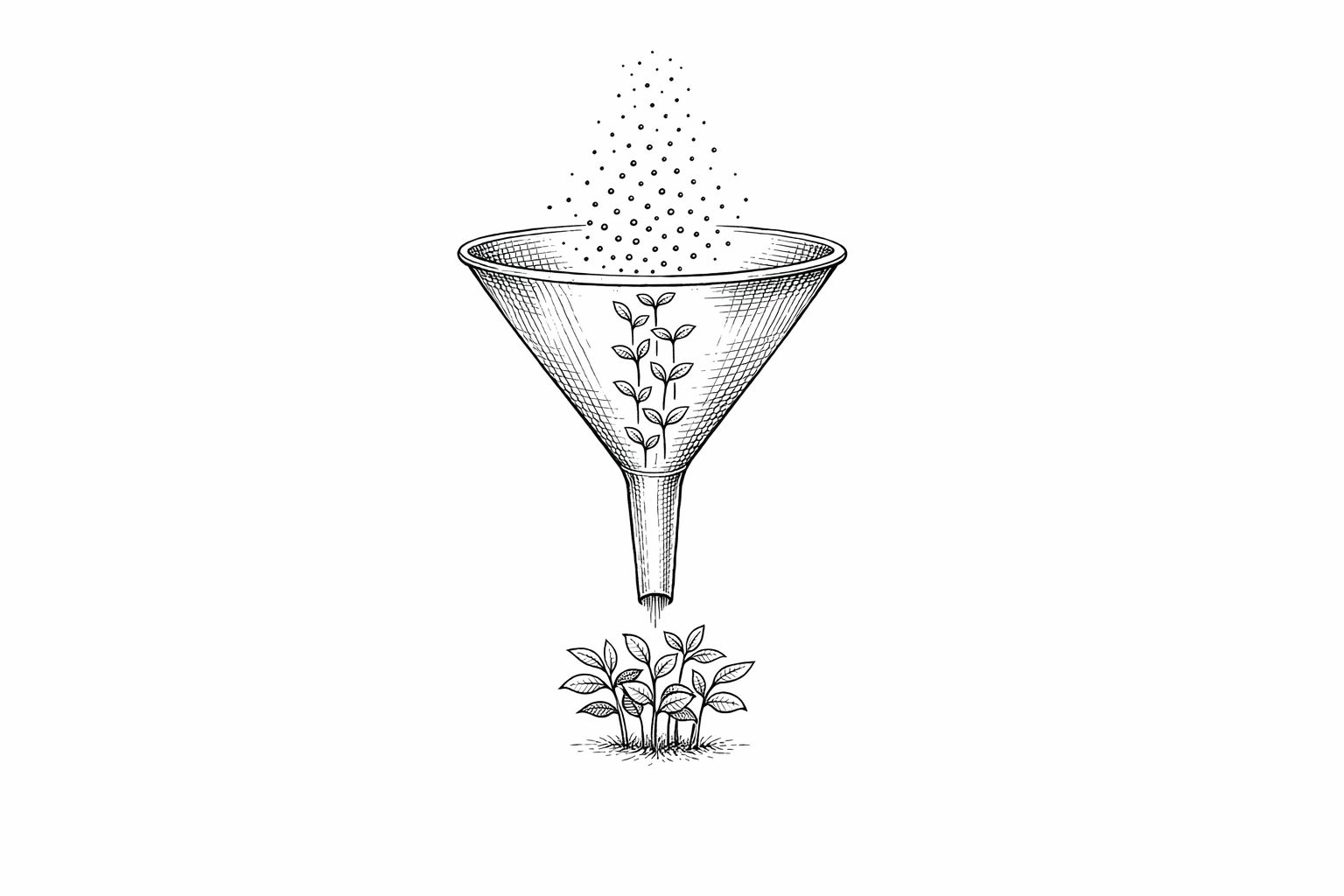
The beta user funnel: many enter, few convert — but the right channels dramatically shift the math.
5. Product Hunt Launch (High Volume, Low Conversion)
Product Hunt is great for visibility, but manage your expectations on conversion.
A survey by MySignature.io found that 26.5% of launches attract 500–1,000 visitors, while 22.4% attract 1,000–2,000. Plausible Analytics reported a real-world conversion: 2,399 visitors from Product Hunt → 33 trial signups — just 1.38%.
That said, 50% of founders report some increase in registrations and 30% report a significant increase after a Product Hunt launch. B2C tools tend to see 500–1,500 signups on a good day; B2B SaaS is more like a few dozen to a few hundred.
Flexprice hit #1 Product of the Day with 500+ upvotes and still only got 50+ signups. Product Hunt is a megaphone, not a sniper rifle.
Conversion rate: 1–3% visitor-to-signup (typical).
Volume: 500–2,000 visitors; 30–500 signups.
Cost: $0.
Speed: 1 day (but weeks of prep).
6. Hacker News Show HN (High Traffic If You Hit the Front Page)
If your product targets developers or tech-savvy users, Show HN can be a firehose. A front-page placement typically delivers 3,000–10,000 unique visitors on day one. Top positions have reported 50,000–95,000 hits.
But conversion is wildly variable. One web app founder reported 30% signup conversion from normal traffic but only 8% from Hacker News — because HN wasn’t their target audience. Another founder got 100 signups from 5,000 visits (2%), while a niche dev tool saw 10 sales from 120 views (8.3%).
The rule: if HN is your demographic, the numbers are excellent. If it isn’t, expect lots of tire-kickers. For a deeper look at choosing the right launch channels, see our startup launch channel guide.
Conversion rate: 2–8% (depends heavily on audience fit).
Volume: 3,000–10,000+ visitors.
Cost: $0.
Speed: 1 day (with long-tail over several days).
7. Build in Public on X/LinkedIn (Slow Burn, High Trust)
Building in public isn’t a quick-win tactic. It’s a compounding one. SaaS founders who share their journey on X grow their audiences 3x faster than those who market silently (OpenTweet, 2025). Companies sharing metrics publicly see a 20–30% increase in user trust, measured by higher sign-up conversion from exposed visitors.
Pieter Levels (Nomad List, Photo AI) spent a decade building in public. When he launched Photo AI with ~350K Twitter followers, he did $5.4K in revenue his first week and scaled to $132K MRR within 18 months. Base44 took a LinkedIn-heavy approach, grew to 400,000 users without paid marketing, and hit $1M ARR in three weeks after launch.
You don’t need a decade. But if you start posting consistently 3–6 months before your beta, OpenTweet data suggests you’ll have 300–800 followers by month 3 — enough to generate tens to low-hundreds of beta signups. We wrote a full breakdown of how to turn build-in-public followers into customers.
Conversion rate: 2–10% from warm followers to signups.
Volume: Scales with audience (tens initially, thousands later).
Cost: $0.
Speed: 3–6 months to see meaningful traction.
8. Referral Waitlists (The Compounding Machine)
This is where the math gets interesting. A well-designed referral waitlist turns every signup into a recruiting engine.
KickoffLabs reports that top-performing waitlist pages hit 20–40% visitor-to-signup conversion. Once people are on the list, a healthy 15–20% share rate (percentage who refer at least one friend) is the benchmark. Referred leads convert at 3–5x the rate of other channels because they arrive pre-sold by someone they trust (Waitlister, 2026).
The canonical examples: Robinhood collected nearly 1 million waitlist signups pre-launch. Dropbox’s referral program drove 60% of all signups and grew the user base from 100K to 4 million in 15 months.
A viral coefficient above 0.5 means referrals are meaningfully offsetting your acquisition costs. Above 1.0 means exponential growth — rare, but possible in bursts.
Conversion rate: 20–40% (landing page); 15–20% referral participation.
Volume: Potentially thousands (if the loop compounds).
Cost: $0–50/mo for tools (Viral Loops, KickoffLabs).
Speed: Starts slow, compounds over weeks.
9. Targeted Paid Ads (Small Budgets Only)
Paid ads can make sense for beta, but only with tiny, tightly targeted campaigns. The goal isn’t scale — it’s speed and signal.
Meta (Facebook/Instagram) CPI in 2024 was $2–5 per install, up from $1–3 in 2019. For a 1,000-user beta, that’s a $2,000–$5,000 budget on Meta alone. Reddit ads offer cheaper CPCs at $0.60–$1.50, with landing page conversion rates of 1.5–4% and typical CPAs of $15–$40 per signup (WordStream, 2024).
Apps using AI-powered UA strategies (predictive bidding, creative optimization) saw 143% higher user growth versus traditional approaches (Zoomd, 2025). If you run paid, use it to feed the algorithm, validate your messaging, and jumpstart store rankings — not as your primary beta channel.
Conversion rate: 1.5–4% (landing page from paid traffic).
Volume: Depends on budget.
Cost: $2–5 CPI (Meta); $15–40 CPA (Reddit).
Speed: Days.
10. Content & SEO (The Long Game That Compounds)
Content isn’t how you get your first 20 beta users. It’s how you stop needing to hustle for every user 6 months from now.
For startups, content and SEO takes 6–12 months to show compounding effects. But mature content programs drive 20–40% of self-serve signups for SaaS companies. Email traffic — which you build through content — converts at 4.29%, higher than paid search (3.75%), organic search (2.86%), or paid social (2.13%) (DigitalApplied, 2026).
The play: start publishing content alongside your beta launch. By the time you’re out of beta, you’ll have an organic engine running in the background. And you won’t need to explain to anyone why consistent publishing beats chasing one viral post.
Conversion rate: 2.86% (organic search); 4.29% (email).
Volume: Compounds over time.
Cost: $0–500/mo (depending on tooling).
Speed: 6–12 months to compound.
Conversion benchmarks for each beta user acquisition tactic. Sources: DigitalApplied 2026, Cleanlist 2026, Awesome Directories 2025, MySignature.io 2024, various founder case studies.
| Tactic | Conversion Rate | Typical Volume | Cost | Speed |
|---|
| Personal network | High (warm) | 10–30 users | $0 | Days |
| Cold email (targeted) | 5–10% reply rate | 20–100 users | $50–100/mo | 1–2 weeks |
| Niche communities | 3–7% click-to-signup | 50–500 users | $0 | 1–2 weeks |
| BetaList | 15–20% signup rate | 50–200 signups | $0–99 | 1–2 weeks |
| Product Hunt | 1–3% visitor-to-signup | 30–500 signups | $0 | 1 day + prep |
| Show HN | 2–8% signup rate | 3K–10K visitors | $0 | 1 day |
| Build in public | 2–10% from followers | Scales over time | $0 | 3–6 months |
| Referral waitlist | 20–40% landing page | Compounds | $0–50/mo | Weeks |
| Paid ads (small) | 1.5–4% LP conversion | Budget-dependent | $2–5 CPI | Days |
| Content & SEO | 2.86–4.29% | Compounds | $0–500/mo | 6–12 months |
The Sequence That Actually Works
You don’t need all 10 tactics. You need the right 3–4, in the right order.
Week 1–2: Start with your personal network and targeted cold email. Get your first 20–50 users who can give you real feedback. These are your foundation.
Week 3–4: Post in 2–3 niche communities. Submit to BetaList. Set up a referral waitlist on your landing page. This is where you scale from dozens to hundreds.
Month 2: If you have a polished product, launch on Product Hunt and/or Show HN. Use the traffic spike to feed your referral loop.
Ongoing: Build in public on X or LinkedIn. Start publishing content. These won’t deliver users this week, but they’ll compound for months.
The founders who get stuck are the ones who skip the boring stuff (personal outreach) and jump straight to Product Hunt — then wonder why their 2,000 visitors didn’t convert.
Quick wins for your landing page
Before you drive any traffic, optimize your beta signup page. These micro-optimizations are backed by data:
- Single-field email form outperforms multi-field forms for waitlists (Waitlister, 2026)
- First-person CTA copy ("Get my early access" vs "Sign up"): +28% conversion lift (DigitalApplied, 2026)
- Microcopy below your CTA ("No credit card required" / "Takes 30 seconds"): +15% lift
- Real-time signup notifications ("Kate from Austin just joined"): +25–40% lift vs static testimonials
- Mobile-first design is critical — 83% of waitlist visitors arrive on mobile (Waitlister, 2026)
The Number That Matters Most
Here’s the thing most beta user guides won’t tell you: the signup number is vanity. The number that matters is activation.
BetterLaunch.co, which tracks ~200 indie launches per month, says you shouldn’t launch publicly until your activation rate exceeds 30% and at least 10 beta users will go on record as advocates. Users admitted within ~30 days of joining a waitlist show ~50% conversion to active customers, while users who wait 90+ days drop to single digits (Waitlister cohort data).
So don’t just collect signups. Get people using the product fast. Close the feedback loop. Turn your best beta testers into your first testimonials, case studies, and referral sources.
That’s how you go from beta to launch with actual momentum — not just a list of email addresses gathering dust.
Got your beta users? Now get organic traffic.
Once you're past the beta phase, SEO becomes your highest-ROI acquisition channel. Vibeblogger handles the entire blog operation — keyword research, writing, images, and publishing — so you can focus on building product instead of writing blog posts.
See how Vibeblogger works