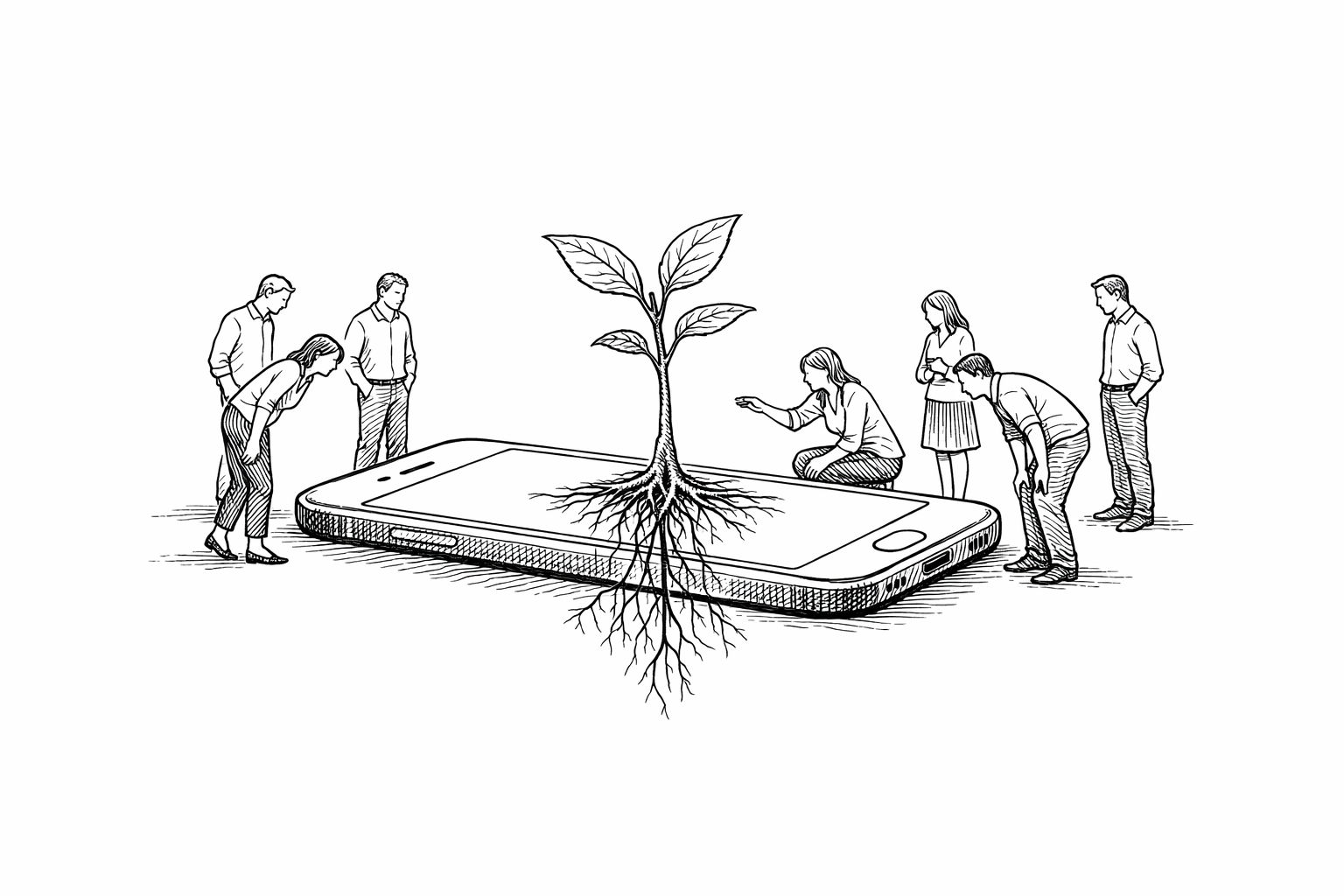
You’re building a SaaS product. You know your app needs a blog. SEO is probably the highest-ROI channel you have. But you don’t have time to write 2,000-word articles every week — so naturally, you’re wondering: can AI content actually rank on Google?
Good news. We’re past the opinions-and-vibes phase. In the past 12 months, Ahrefs analyzed 600,000 ranking pages, Digital Applied tracked 4,200 articles across 140 domains for 16 months, and the AI+Automation research team studied 100,411 AI citation events. We finally have real data.
The short answer: yes, AI content can rank on Google in 2026. But the gap between AI content that ranks and AI content that gets buried is massive — and it comes down to one specific variable.
Let’s walk through the numbers.
Google’s Official Stance: They Don’t Care How You Made It
Before we look at studies, let’s establish the baseline. Google’s position on AI content has been consistent since February 2023 and hasn’t changed:
“Our focus on the quality of content, rather than how content is produced, is a useful guide that has helped us deliver reliable, high quality results to users for years.”
From Google’s Search Central documentation: AI content is not against their guidelines. What is against their guidelines is using automation to manipulate rankings — which is the same rule they’ve applied to human content for decades.
Google is method-agnostic. They care about E-E-A-T (Experience, Expertise, Authoritativeness, Trustworthiness), not whether a human or an LLM typed the words.
Google's exact words
"Using AI doesn't give content any special gains. It's just content. If it is useful, helpful, original, and satisfies aspects of E-E-A-T, it might do well in Search. If it doesn't, it might not." — Google Search Central
So there’s no secret AI penalty. But Google’s spam policies have gotten significantly stricter. The June 2025 Core Update integrated the Helpful Content system deeper into core ranking. The March 2026 Core Update hit hard. If your AI content is thin, templated, or scaled without adding value, it’s going to get crushed — not because it’s AI, but because it’s bad.
Now let’s see what happens in practice.
Study #1: Ahrefs Analyzed 600,000 Ranking Pages
Ahrefs ran their AI content detector across 600,000 pages ranking in the top 20 for 100,000 random keywords. The results surprised a lot of people.
Here’s what they found in the pages already ranking on Google:
- 13.5% were categorized as pure human
- 4.6% were categorized as pure AI
- 81.9% were a mix of human and AI
Read that again. 86.5% of top-ranking pages contain some AI-generated content. If Google wanted to penalize AI content, these numbers would be impossible.
The correlation between AI content percentage and ranking position? 0.011. That’s effectively zero. Google is genuinely indifferent to the presence of AI in your content.
But here’s the nuance Ahrefs also found: purely AI pages rarely reach #1. Pages with minimal AI use (0-30%) correlate very slightly with higher rankings at the very top of SERPs. The correlation is weak, but it’s there.
The takeaway: AI content is everywhere in Google’s results. It doesn’t get penalized. But the very top spots still lean toward human-heavy content.
Study #2: 4,200 Articles Tracked for 16 Months
Digital Applied ran the most rigorous study I’ve seen on this topic. They tracked 4,200 articles across 140 domains for 16 months, splitting them into three groups: pure AI (1,400 articles), AI-assisted with human editing (1,400), and fully human-written (1,400).
The headline number: pure AI content ranked 23% lower on average than human-written articles targeting the same keywords.
Performance data from Digital Applied's 16-month, 4,200-article study across 140 domains
| Metric | Pure AI | AI-Assisted | Human-Written |
|---|
| Avg. ranking gap vs. human | −23% | −4% | Baseline |
| Backlinks acquired (relative) | 61% fewer | Comparable | Baseline |
| Deindexation risk | 3.2× higher | ~1× | Baseline |
| Low-competition KD (0-25) gap | −8% | Negligible | Baseline |
| High-competition KD (51+) gap | −41% | ~−8% | Baseline |
The critical insight here isn’t that AI content fails. It’s that AI-assisted content performs within 4% of fully human-written content. That 4% gap is so small it’s barely worth worrying about.
The variable that matters isn’t who typed the first draft. It’s whether the published article has real editorial quality — original data, expert attribution, genuine insight.
Also notice the backlink gap: AI-only content earned 61% fewer editorial backlinks. Since backlinks remain a top-3 ranking signal, this is probably the single biggest reason raw AI content underperforms. People don’t link to generic content, regardless of who wrote it.
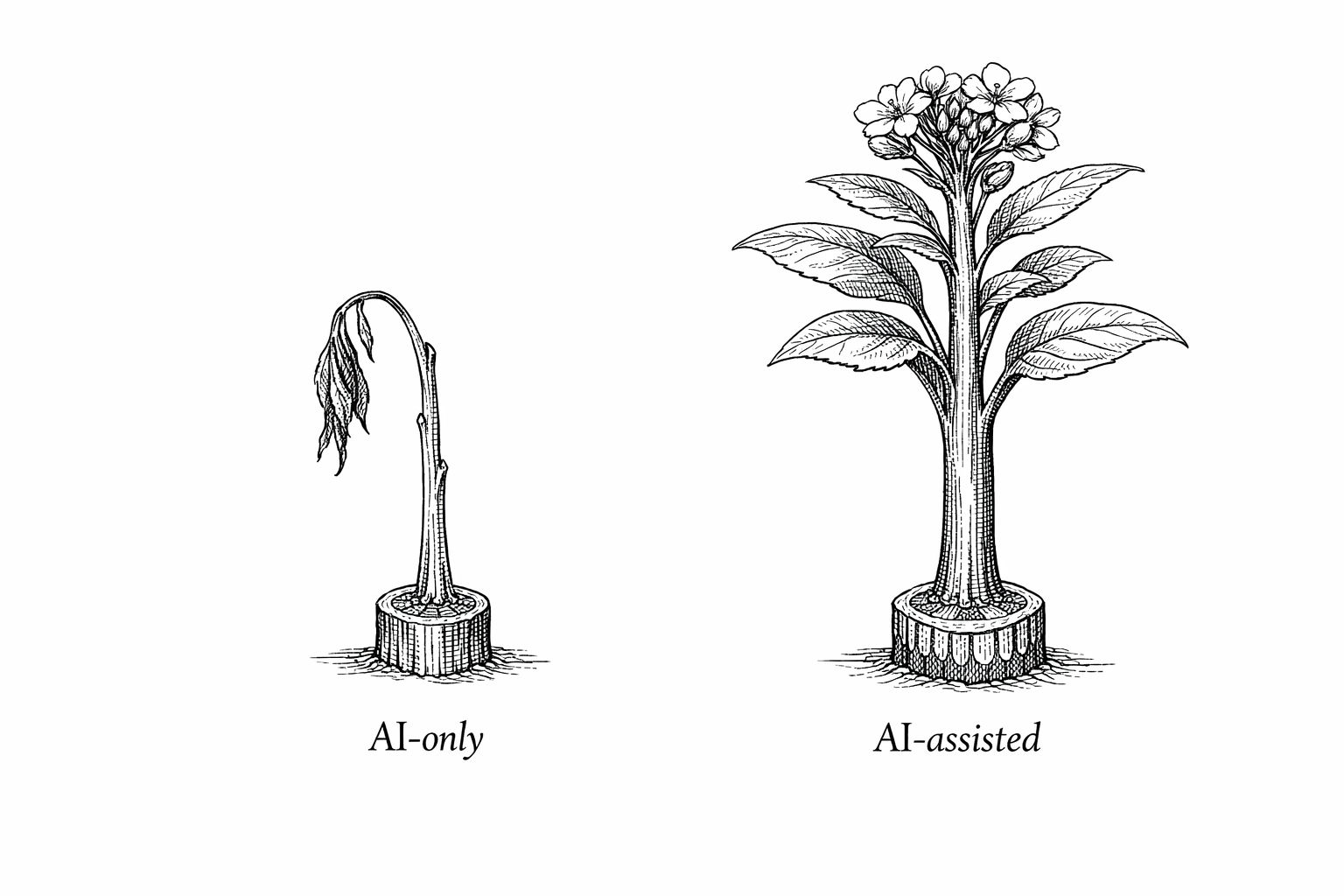
AI-only content wilts over time. AI-assisted content with real editorial quality grows just as well as fully human-written content.
Study #3: AI Wins the Sprint, Loses the Marathon
Digital Applied also ran a separate 6-month paired study — 200 articles across 14 domains, matched on everything: same domain, same publish week, same internal link template, same word count band.
The finding that changes how you should think about AI content:
- Week 1: AI content started at a median position of 18. Human content at 22. AI wins.
- Month 3: Trajectories invert. Human gains +6 positions. AI drifts −3.
- Month 6: Human content sits at median position 16. AI at 21. A full 5-position gap, completely reversed from the start.
AI content indexes faster — but don't mistake early gains for lasting ones
AI content indexed 1.8× faster (14 hours vs 26 hours) and started higher. But by month 3, ranking trajectories inverted. If you're measuring AI content performance at 2 weeks, you're getting a misleading signal.
Why does this happen? A few reasons the data suggests:
- Backlinks: Human content earned 4× more backlinks over the same period (median 8 vs 2)
- Engagement: Bounce rate on AI content was 64% vs 56% for human. Session duration was 1m 42s vs 2m 31s
- SERP features: Featured snippet capture was 12% for AI vs 19% for human. AI Overview citation rate was 4% vs 11%
- CTR: Even at the same position, AI titles got 8% lower click-through rates
The data is clear: AI content can get you quick wins. But if you want sustained rankings, you need editorial quality on top of the AI draft. This is exactly why tools that combine real keyword data with AI generation outperform pure ChatGPT copy-paste workflows.
What About Content Farms? The Scaled Content Graveyard
If the studies above show that good AI content can rank, the flip side is equally clear: bad AI content gets obliterated.
Sistrix’s 2025 winners-and-losers analysis found that AI-first content farms — sites built on bulk, lightly-edited AI articles — lost 70-90% of organic visibility after Google’s scaled content abuse updates.
After the March-April 2026 core updates, the damage was even more targeted:
- Programmatic SEO sites with thin AI content: 60-80% traffic drops
- Affiliate sites with AI-rewritten comparisons: 40-60% traffic drops
- SaaS blogs that scaled AI-heavy content without editorial oversight: 30-50% traffic drops
The pattern is consistent. Google isn’t punishing “AI content.” It’s punishing content that doesn’t add value — and AI makes it really easy to produce content that doesn’t add value at scale.
The AI Overview Factor: Rankings Aren’t the Whole Game Anymore
Here’s something most founders aren’t tracking yet: Google AI Overviews now appear on roughly 47% of search queries (OTT SEO’s 2025 tracking across 450+ campaigns). That number was 31% in early 2024.
When an AI Overview shows up, the #1 organic result sees 34.5% lower CTR (Seer Interactive data). That’s a massive hit, and it affects AI and human content equally.
But here’s the opportunity: brands cited inside AI Overviews get 35% more organic clicks and 91% more paid clicks than non-cited brands (BrightEdge 2025-2026 data). Getting cited in the AI Overview is becoming as valuable as ranking #1.
What Matters for Ranking vs. AI Overview Citation
| Factor | Traditional Ranking | AI Overview Citation |
|---|
| Top-10 overlap | Baseline | Only 38% of cited pages also rank top 10 (Ahrefs, 863K keywords) |
| Schema markup | Helpful | Strongest content-feature predictor (OR=1.31) |
| Content freshness | Moderate signal | 25.7% fresher URLs cited vs. traditional SERPs |
| Named authorship | E-E-A-T signal | 2.4× citation lift vs anonymous content (WinWithSEO) |
| Brand authority | Strong signal | Top-3 pages are 34× more likely to be cited |
The key stat from Ahrefs’ 2026 study of 863,000 keywords: only 38% of pages cited in AI Overviews also rank in the top 10 for the same query. That’s down from 76% just seven months earlier. Ranking #1 no longer guarantees you’ll show up in the AI Overview.
For founders, this means your content strategy needs to optimize for two things: traditional rankings and AI Overview citations. Fresh, well-structured content with clear data and named authorship wins on both fronts.
The Practical Playbook: How to Use AI Content That Actually Ranks
Based on every study and dataset above, here’s what works and what doesn’t in 2026.
The AI Content Playbook That Ranks
Step 1
Use AI for drafting, not publishing
AI-assisted content performs within 4% of human-written content. Pure AI content ranks 23% lower. The draft is the easy part — the editorial layer is what makes it rank. Add original data, real examples, and expert perspective to every AI draft.
Step 2
Start with real keyword data
74% of new web content now includes AI (Ahrefs). The flood of AI content means keyword selection matters more than ever. Don't write about topics just because they're trending — write where you can demonstrate genuine expertise and authority.
Step 3
Publish at a human pace
Content farms that scaled to hundreds of AI posts per month lost 70-90% visibility. Publish at a volume your team can realistically edit with quality. 8-12 well-edited posts per month beats 50 thin ones.
Step 4
Optimize for AI Overview citations
Schema markup (OR=1.31), content freshness (25.7% fresher citations), and named authorship (2.4× citation lift) are the strongest predictors. Structure content with clear headings, data tables, and direct answers to questions.
Step 5
Monitor beyond week 2
AI content indexes 1.8× faster and starts higher — but trajectories invert by month 3. If you're measuring success at 2 weeks, you're getting a misleading signal. Track rankings at 3 and 6 months.
The Bottom Line: AI Is the Tool, Not the Strategy
Let’s be direct about what the data tells us.
AI content can rank on Google in 2026. It’s not penalized. 86.5% of top-ranking pages already contain some AI. The correlation between AI detection percentage and ranking position is 0.011 — essentially zero.
But raw, unedited AI content underperforms by 23%. It earns 61% fewer backlinks. It has a 3.2× higher deindexation risk. And it fades after month 3 while human-edited content climbs.
The founders who win at SEO in 2026 aren’t the ones avoiding AI. They’re the ones using AI as a drafting engine inside a quality editorial system — not as a replacement for one.
Google said it best: AI content is just content. Make it genuinely helpful, back it with real expertise, and it’ll rank. Pump out generic filler at scale, and it’ll get crushed — exactly the same way generic human content always has.
The One Number to Remember
AI-assisted content with substantive human editing performs within 4% of fully human-written content on median ranking position. The bottleneck isn't AI — it's editorial quality. (Source: Digital Applied, 16-month study, 4,200 articles)
Want Your SaaS Blog to Rank Without Becoming a Full-Time Writer?
Vibeblogger is the AI content team for founders. We handle keyword research, writing, images, and publishing — so you can focus on building your product. Every post on this blog was researched, written, and published by Vibeblogger itself.
See How Vibeblogger Works