How to Test Your SaaS Idea Before Writing a Single Line of Code
92% of SaaS startups fail within 3 years — and 42% die because nobody wanted the product. Here's the data-backed, step-by-step validation playbook that costs a weekend instead of six months.
Rori Hinds··9 min read
You can build a SaaS in a weekend now. Vibe coding tools, AI app builders, and no-code platforms have compressed the build phase from months to days. If you’re figuring out how to build a SaaS with AI, the hard part isn’t the code anymore.
That’s the problem.
When building feels free, founders skip the one step that actually determines whether their product lives or dies: validation. And the data on what happens next is brutal.
The $50,000 Mistake 92% of Founders Make
CB Insights analyzed 431 VC-backed startups that shut down after raising a combined $17.5 billion. The number one cause of death? “No market need” — cited by 42% of failed startups.
Not bad code. Not running out of money. Not getting outcompeted. They built something nobody wanted.
And here’s what makes this worse in 2025: only 40% of startups do any formal validation before they start building. The other 60% jump straight to code — and 90% of those fail.
The math is simple. A validation sprint costs $200-500 and a weekend. A SaaS MVP costs $15,000-$50,000 and 3-6 months. You’re either spending a weekend finding out your idea doesn’t work, or spending six months finding out.
The Vibe Coding Trap
AI tools like Cursor, Replit, and Lovable make it possible to ship an app in a weekend. But 70% of SaaS founders build features before validating demand. The easier it is to build, the more tempting it is to skip validation — and the more important it becomes not to.
Why “That Sounds Cool” Is Worthless
Let’s talk about the validation methods that don’t work.
Asking friends if your idea is good? They’ll say yes. Rob Fitzpatrick, author of The Mom Test, puts it bluntly: “When asked to evaluate a founder’s business idea, people lie to spare the founder’s feelings.”
Collecting email signups on a landing page? One founder had 2,000 emails for a product that converted exactly 3 paying customers. Email addresses are free. Credit cards are not.
Posting in a subreddit and getting upvotes? People complaining about a problem and people willing to pay for your solution are two completely different populations.
Real validation answers exactly one question: Will someone hand you money to solve this problem? Not “would they” in some hypothetical future. Will they, right now, before your product even exists?
If they haven't looked for ways of solving it already, they're not going to look for (or buy) yours.
5 Validation Methods That Actually Work (Ranked by Signal Strength)
Not all validation is equal. Here are the five methods that produce real data, ranked from strongest to weakest signal — with the numbers behind each one.
1. Pre-Sales: Get Paid Before You Build
Signal strength: 10/10
The gold standard. Ask potential customers to put down money — a deposit, a pre-order, a discounted annual plan — for a product that doesn’t exist yet.
This isn’t theoretical. Buffer founder Joel Gascoigne validated his entire product with a two-page website. Page one described the idea. Page two showed pricing tiers ($0, $5/month, $20/month). People selected paid plans and entered their emails before any code existed. He built the MVP in 7 weeks and had his first paying customer within 4 days of launch.
Your target: 3 or more people willing to pay before you write a line of code. If you can’t hit that number across 20+ conversations, your idea needs work.
Create a landing page that describes your solution, shows real pricing, and has a “Get Started” button. When someone clicks, show them: “We’re in early access. Book a call to get onboarded this week.”
The key detail most people miss: include pricing. A landing page without pricing tests curiosity, not willingness to pay. Industry benchmarks show SaaS self-serve landing pages convert at 4-10% (Unbounce, Q4 2024, 41,000 pages analyzed). If your fake door converts above 8% CTR, that’s a strong build signal.
Time investment: 2-4 hours with Carrd or Framer. Cost: $0-20.
3. The Mom Test Conversations
Signal strength: 7/10
Find 10 people who match your ICP. Not friends. Not family. Real potential customers on Reddit, LinkedIn, Twitter/X, or niche Slack communities.
The script: “Hey, I’m researching [problem area]. Do you deal with [specific problem]? Would love to hear how you currently handle it. 15 minutes, no pitch, just learning.”
But here’s what matters: don’t ask if they’d use your product. Ask about their past behavior. How did they try to solve this last time? How much did it cost them? What did they try before?
If they’ve never actively tried to solve the problem, they won’t buy your solution either. You need 10 conversations. Not surveys. Conversations.
4. The Concierge MVP
Signal strength: 7/10
Become the product yourself. Want to build an invoice automation tool? Do invoices manually for 5 customers. Building a social media scheduler? Schedule posts manually using spreadsheets.
Offer the service at 50% of your planned price. This is high enough to validate real willingness to pay but low enough to incentivize early adoption.
One founder validated a $50K/year B2B SaaS by being a “human API” for 3 months. Brutal? Yes. But when he finally wrote code, he knew exactly which features mattered and which were noise.
5. The Explainer Video Test
Signal strength: 6/10
Dropbox proved this works at scale. Drew Houston created a 3-minute screen recording demo showing how file syncing would work — before the product was ready. He posted it on Hacker News. The waitlist went from 5,000 to 75,000 signups overnight.
You don’t need Dropbox-level virality. Record a 2-minute Loom walkthrough of your product concept, post it in 3-5 communities where your ICP hangs out, and track signups. If you can’t get 50 signups from 500 views (10% conversion), the positioning needs work.
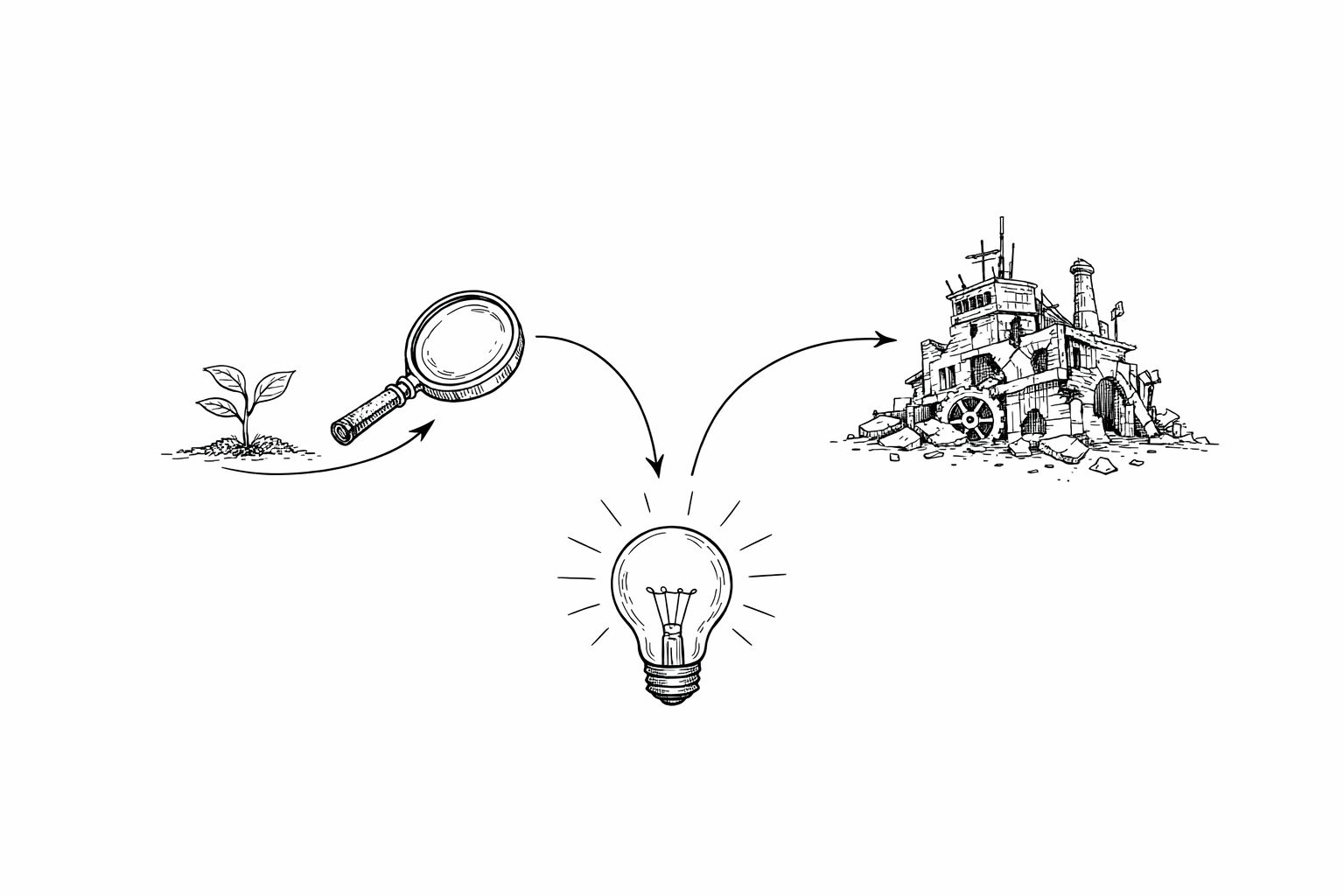
Two paths from the same idea. One costs a weekend. The other costs six months.
Validation methods compared by cost, time, and signal quality
Method
Cost
Time
Signal Strength
What It Proves
Pre-sales
$0
1-2 weeks
★★★★★
People will pay real money
Fake door test
$0-20
2-4 hours
★★★★☆
People click "buy" at your price
Mom Test interviews
$0
1 week
★★★★☆
Problem is real and painful
Concierge MVP
$0
2-4 weeks
★★★★☆
Solution works, people pay
Explainer video
$0-50
1-2 days
★★★☆☆
Concept resonates with ICP
The Weekend Validation Sprint
Here’s a concrete 48-hour timeline you can run this weekend. No code. No designer. Just you, a laptop, and intellectual honesty.
48-Hour Validation Sprint
Step 1
Hours 0-4: Market Check
Google your idea + "alternative" and "vs" — if nobody's searching for solutions, the market might not exist. Check Google Trends for directional demand. Look for competitors: if there are zero, that's usually a bad sign, not a good one. Target markets with >10% CAGR.
Step 2
Hours 4-12: Find 10 Real Prospects
Search Reddit, LinkedIn, Twitter/X, and niche communities for people actively complaining about your problem. DM 20-30 people with: "I'm researching [problem]. What are you currently using to solve it? Not selling anything, just learning." Aim for 10 replies.
Step 3
Hours 12-24: Run Mom Test Conversations
Get 5-10 people on 15-minute calls. Ask about past behavior, not hypotheticals. "When did this last happen? What did you try? How much did it cost you?" Take detailed notes. Look for patterns across conversations.
Step 4
Hours 24-36: Build a Fake Door
Spin up a one-page site on Carrd or Framer. Describe the solution (not the problem). Add real pricing. Add a "Get Started" button that leads to a "Book a call for early access" form. Share in 3-5 communities where your ICP hangs out.
Step 5
Hours 36-48: The Credit Card Close
For anyone who books a call or shows strong interest, pitch: "I'm building this. It'll cost $X/month. If you put down a deposit today, you get lifetime beta pricing." 3+ people pay = green light. Deep conversations but pricing objections = pivot the offer. Silence or polite nos = kill the idea.
The Kill Criteria
Be honest with yourself. If you can't find 10 people to talk to, the market is too small. If you can't get 3 out of 10 to try a manual version, the problem isn't painful enough. If they try it but won't pay, your solution doesn't work. Each of these is a gift — it just saved you 6 months.
Here’s what most guides about how to build a SaaS with AI won’t tell you: the AI part is the easy part.\n\nVibe coding tools like Cursor, Bolt, and Lovable can scaffold a working app in hours. An indie hacker with an AI app builder can go from idea to deployed product faster than ever. But that speed is worthless if you’re building something nobody wants.\n\nThe founders who actually reach $1K MRR don’t start with code. They start with 10 conversations. They start with a fake door. They start with someone’s credit card number.\n\nThen they use AI to build fast — with conviction, because they already know people will pay.\n\nIf you’re building in public, your first update shouldn’t be “shipped the MVP.” It should be “talked to 10 potential customers and 3 offered to pay before I wrote a line of code.” That’s the post that gets engagement and sets you up to succeed.\n\nOnce you’re ready to launch, a well-executed Product Hunt launch strategy can be the fastest path to your first 500 users — but only after you’ve validated that people actually want what you built.
Once You’ve Validated, You Need to Be Found
Validation gets you a product people want. But people still need to find you.
SEO is the highest-ROI marketing channel for bootstrapped founders — it costs 5.8x less per lead than paid ads and compounds over time. But you also need a go-to-market plan for your first users. A zero-budget go-to-market strategy can get you to your first 100 users while your content engine builds momentum. Most indie hackers don’t have time to research keywords, write 2,000-word articles, and publish consistently.
That’s exactly why we built Vibeblogger.
Your SaaS Is Validated. Now Make Google Find It.
Vibeblogger handles the entire blog operation for your SaaS — keyword research, writing, images, and publishing. No freelancers, no ChatGPT copy-pasting, no spending your weekend on blog posts.