You’re three months from launch. Your product is coming together. But the question that keeps you up at night isn’t about code — it’s about distribution.
How do you actually get first users when you go live?
The default answer is “launch on Product Hunt and hope for the best.” But here’s what the data actually shows: 98% of products that launch on Product Hunt never crack the top 5. They get 12-30 upvotes and disappear. The ones that win? 60%+ of their launch-day traffic comes from a pre-built email list, according to an analysis of 100+ successful 2024-2025 launches.
Your email list isn’t a nice-to-have. It’s your go-to-market strategy.
Why Email Beats Every Other Pre-Launch Channel
Let’s talk numbers, because this isn’t even close.
Email marketing returns $36-42 for every $1 spent — the highest ROI of any digital channel, according to Litmus’s 2024-2025 State of Email report. For comparison, paid social averages $2-5 per $1.
But the real advantage for pre-launch founders is ownership. You post on Twitter/X, and maybe 5% of your followers see it. LinkedIn throttles you. TikTok’s algorithm is a slot machine. An email list? 95%+ delivery rate, and you control the timing.
Here’s the pre-launch math that should change how you think about this:
With 1,000 email subscribers on launch day:
- 30-40% open your launch email (300-400 people)
- 10-20% of openers click through (30-80 people)
- 5-10% of clickers convert (2-8 paying customers)
That’s 2-8 customers on day one, zero ad spend. And unlike a Product Hunt spike that fades in 48 hours, your list keeps working — product updates, feature launches, upsells.
The 100 > 10,000 Rule
100 subscribers who genuinely have the problem you're solving beats 10,000 who signed up for a giveaway. Every case study we researched confirmed this: list quality drives launch-day conversions, not list size. Superhuman's entire waitlist strategy was built around qualifying subscribers before granting access.
Real Founders, Real Numbers
Theory is nice. Let’s look at what actually happened.
Resend: 6,338 waitlist signups in 7 weeks. Zeno Rocha, the founder, documented exactly how. His first tweet about Resend got 999K views, 4,634 likes, and 282 replies. But the tweet worked because he’d spent years building in public — 39.4K Twitter followers before launch. His tactical advice: post video content (it outperforms everything), post at 7am PT on a Wednesday (California wakes up, East Coast is early, Europe hasn’t ended their day), and show personality on your landing page. Resend’s landing page used a WebGL Rubik’s cube animation — unusual for a developer tool — and it worked because it communicated “we care about craft.”
Superhuman: 300,000+ waitlist signups. Their strategy was a referral loop where existing users could invite contacts from the waitlist, moving them ahead in line. Every new user went through a mandatory 30-minute onboarding call ($30 cost, but 60x ROI against $1,800 LTV). The friction was the feature. By qualifying subscribers at every stage — signup, referral, survey, call — they ensured the people who got access were exactly the right users. The waitlist persisted for 6+ years.
Buffer: 100,000 users in 9 months. Joel Gascoigne’s playbook was unglamorous but relentless: 150 guest posts in 9 months. He built relationships with bloggers before pitching, contributed genuine value, and linked back to Buffer’s signup page. No paid ads. Groove used a similar approach and hit 5,000 subscribers in five weeks.
Webflow: 20,000+ waitlist signups in one week. No built-in virality, no social media following, limited runway. They launched on Hacker News and targeted designer communities with a product demo that spoke for itself.
Pre-launch email list results from real SaaS startups
| Company | Waitlist Size | Timeframe | Primary Channel |
|---|
| Resend | 6,338 | 7 weeks | Twitter/X + landing page |
| Superhuman | 300,000+ | 6+ years (ongoing) | Referral loop |
| Buffer | 100,000 | 9 months | 150 guest posts |
| Webflow | 20,000+ | 1 week | Hacker News + communities |
| Dub.co | 25,000+ | Pre-launch period | Build in public + Twitter |
The 5-Step Playbook for Building Your Pre-Launch List
You don’t need 300K subscribers. For most indie SaaS products, 500-1,000 targeted subscribers is enough to have a meaningful launch day. Here’s how to get there.
Pre-Launch Email List Playbook
Step 1
Build a landing page that earns the signup
You need one page with five elements: a headline that names the problem, 2-3 sentences about what you're building, an email capture form, a clear CTA ('Join the waitlist' or 'Get early access'), and optional social proof. Average landing page email signup conversion is **2.9%** — the top 10% hit **6.5%**. Use Carrd ($0-19/year), Webflow (free tier), or your framework of choice. Spend 2-3 hours max. You'll iterate as you learn what resonates.
Step 2
Go where your users already hang out
Reddit, Indie Hackers, niche Slack/Discord communities, Twitter/X, LinkedIn. The rule: contribute value for at least a week before mentioning your product. Share insights about the problem you're solving, not your solution. When you do share, make it a genuine ask for feedback, not a pitch. Direct outreach converts better than public posts for early momentum — 'Hey [Name], I'm building [one-liner]. Based on your post about [topic], thought you'd want early access.'
Step 3
Build in public — with numbers
The build-in-public movement isn't just vibes. Founders who share consistent progress updates (3-5 posts per week) see measurable audience growth within 60-90 days. The format that works best: lead with numbers ('MRR hit $2,400 this month, up 18%'), add narrative, then share a lesson. Resend's founder kept momentum by sharing company news and product updates with waitlist subscribers between signup and launch.
Step 4
Add a referral loop
Superhuman's waitlist grew because every user became a distribution channel. You don't need their scale — even a simple 'Move up the waitlist by referring a friend' mechanic works. Morning Brew scaled to 4M subscribers using referral rewards. Tools like Waitlister, Viral Loops, or SparkLoop can add referral tracking to your waitlist in an afternoon. Target **5-15% monthly growth** from referrals alone.
Step 5
Warm the list before launch day
Don't go silent after collecting emails. Send a welcome email (50-85% open rate for SaaS), then a behind-the-scenes update every 1-2 weeks. Build up to a 4-6 email launch sequence: welcome, what to expect, relationship builder, pre-launch freebie, launch day, post-launch follow-up. Products that warmed their lists saw welcome email open rates of **50-85%** and click-through rates of **20-40%** — massively higher than cold launches.
The Product Hunt Multiplier
A pre-launch email list doesn’t replace a Product Hunt launch strategy — it supercharges it.
Here’s the data from an analysis of 23 successful Product Hunt launches: the median signups generated from a top-5 finish was 3,200, with median first-month revenue of $28,400. Products with 400+ waitlist subscribers were 3-5x more likely to reach the top 5.
The winning pattern: build an email list of 300-500 supporters 2-4 weeks before launch, then coordinate their engagement in the first 6 hours. Launch at 12:01 AM PST on a Tuesday-Thursday (34% more visibility than Monday/Friday). Have 200+ first-hour supporters queued and ready.
Looms nailed this. After 2 years in private beta building their audience, they launched on Product Hunt and hit #1 Product of the Day, #1 of the Week, and #1 Dev Tool of the Month. Their secret? They came in with an existing audience that showed up on launch day.
If you’re preparing for a launch, the data-backed Product Hunt launch playbook covers exactly what the algorithm rewards in 2026 — from timing to your first-hour engagement strategy.
Don't Skip the Product Hunt Prep
Product Hunt's 2025-2026 algorithm now penalizes low-engagement products aggressively. Raw upvote counts matter less — comments, maker replies, and time-on-page are the new ranking signals. Your pre-launch list gives you the engaged humans needed to generate real engagement, not just votes.
The Channel That Compounds: SEO
Every tactic above works. But most of them are one-time spikes. Guest posts, Product Hunt launches, community posts — they drive traffic on day one and fade.
SEO is different. A single well-targeted blog post can drive email signups for years. And the math works beautifully for pre-launch founders.
Write about the problem you’re solving, not your product. If you’re building a project management tool, write about “how engineering teams estimate sprints” or “why standups waste time.” These posts attract exactly the people who will want your product — and every reader who subscribes is a future customer.
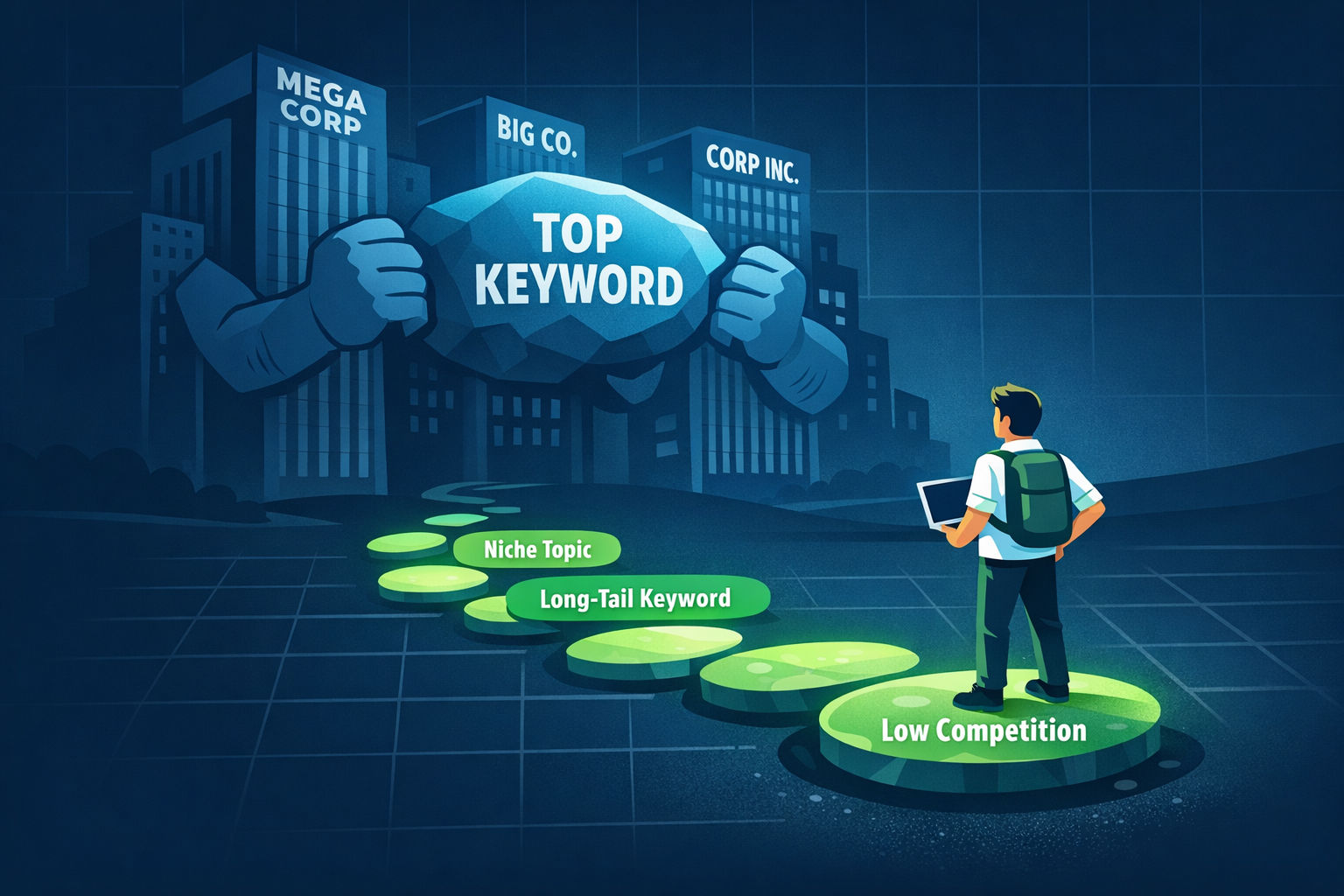
You don’t need massive traffic. Even finding zero-competition keywords in your niche can drive 50-200 targeted visitors per month per post. That’s 10-30 email subscribers per month, compounding over time. Four months of consistent publishing and you have your 500-subscriber launch list — built entirely from people who found you through the exact problem your product solves.
This is the unsexy truth about your go-to-market strategy as a startup: the founders who start publishing content 3-4 months before launch have a massive advantage over those who wait until launch day to think about distribution. If you’re wondering whether your content is actually driving results, there are straightforward ways to measure that even at the pre-revenue stage.
The Conversion Benchmarks You Need
Here’s what “good” looks like at each stage, so you can benchmark your own funnel:
Pre-launch email funnel benchmarks for SaaS founders
| Funnel Stage | Benchmark | Source |
|---|
| Landing page → email signup | 2.9% average, 6.5% top 10% | Bdow (2024) |
| Welcome email open rate | 50-85% | Sequenzy SaaS benchmarks |
| Welcome email click rate | 20-40% | Sequenzy SaaS benchmarks |
| Launch email open rate | 30-40% | Industry average (B2B SaaS) |
| Launch email → click | 10-20% of openers | GetResponse benchmarks |
| Click → conversion (purchase/signup) | 5-10% of clickers | Foundra / industry data |
| Referral program monthly growth | 5-15% | Morning Brew / industry data |
| Email marketing ROI | $36-42 per $1 spent | Litmus State of Email 2025 |
What to Do This Week
You don’t need to implement all five steps at once. Here’s the minimum viable email list strategy:
- Today: Set up a landing page on Carrd or your framework of choice. Headline + 2 sentences + email form. Done in 2 hours.
- This week: Post in 2-3 communities where your target users hang out. Not pitching — contributing. Share a genuine insight about the problem you’re solving.
- This week: Write one blog post about a problem your future users face. Target a low-competition keyword nobody else is covering.
- Next week: Send your first email to whoever signed up. Be human. Share what you’re building and why.
- Ongoing: Post 3-5 times per week about your progress. Build in public. Let the compound effect do its work.
The founders who launch into silence are the ones who treated distribution as an afterthought. The founders who launch into traction — like Resend, Superhuman, and Buffer — are the ones who started building their audience months before they had a product to sell.
Start your list today. Your future launch-day self will thank you.
Want Your SaaS to Rank on Google — Without Writing a Single Post?
Building an email list through SEO content works. But researching keywords, writing posts, generating images, and publishing consistently? That's a second job. Vibeblogger handles the entire blog operation — from keyword research to published post — so you can focus on building your product.
See How Vibeblogger Works